
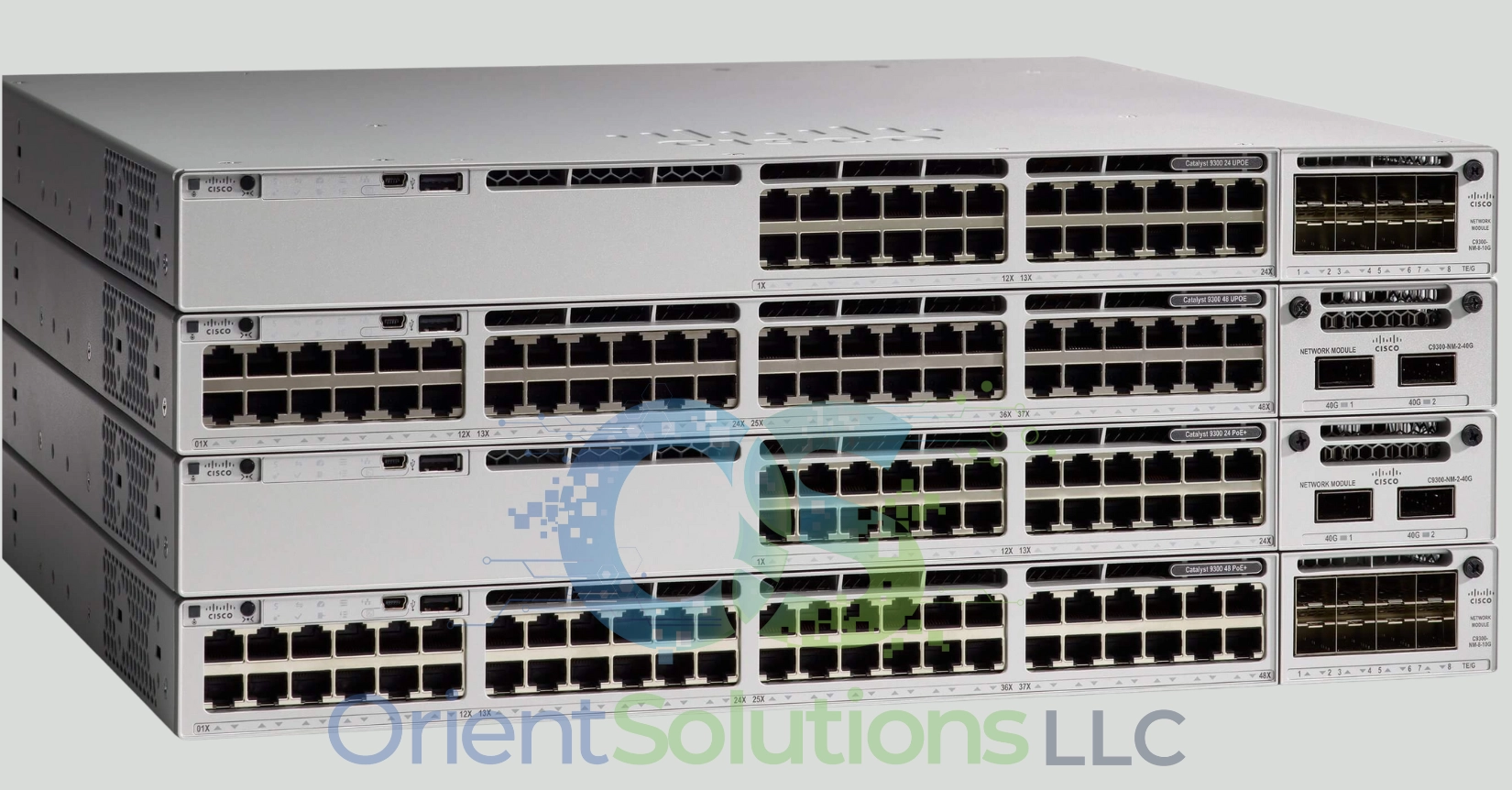
High-Performance Network Switches UAE for Enterprise Networks
Modern businesses depend on reliable network infrastructure for applications, servers, cloud services, VoIP, Wi-Fi, security systems and day-to-day operations. As network traffic increases, choosing the right high-performance network switches in the UAE becomes important for maintaining throughput, security, scalability and operational reliability.
Enterprise network switches provide more than basic Ethernet connectivity. Depending on the model and deployment, they can support managed switching, VLAN segmentation, Layer 3 routing, Power over Ethernet (PoE), high-speed uplinks, Quality of Service (QoS), access control and centralized network management.
For organizations in Dubai, Abu Dhabi, Sharjah and other UAE locations, switch selection should be based on the organization's current workload, network architecture, port requirements, uplink capacity, security requirements and future expansion plans.
What Is a High-Performance Network Switch?
A high-performance network switch is an enterprise networking device designed to provide reliable, efficient connectivity between servers, workstations, access points, IP phones, security cameras and other network devices.
Unlike basic unmanaged switches, enterprise managed switches can provide greater control over network traffic and configuration. Depending on the platform, administrators may be able to configure VLANs, link aggregation, QoS, access control lists, Layer 3 routing and monitoring.
The right switch therefore depends not only on port speed but also on the overall network architecture.
Why Do UAE Businesses Need Enterprise Network Switches?
Business networks increasingly carry multiple types of traffic simultaneously. A typical enterprise environment may include:
- Business applications
- Virtualization and server traffic
- Cloud connectivity
- IP telephony
- Video conferencing
- Wi-Fi access points
- IP surveillance cameras
- Storage traffic
- Backup traffic
- Internet and WAN connectivity
- Guest and corporate networks
A switch must be capable of handling the required traffic while maintaining appropriate segmentation, security and redundancy.
For larger environments, network design should also consider the relationship between access, distribution and core switching layers.
Key Features to Consider When Choosing Network Switches
1. Port Speed and Density
The number and speed of Ethernet ports should match current requirements and expected growth.
Common considerations include:
- 1GbE access ports
- 2.5GbE and higher-speed access
- 10GbE uplinks
- 25GbE, 40GbE or higher-speed data center connectivity where required
- SFP/SFP+ and other fiber interfaces
- Port density for users and connected devices
Selecting a switch only by the number of ports can create bottlenecks elsewhere in the network. Uplink capacity should be evaluated together with access-port capacity.
2. Power over Ethernet
PoE can simplify deployments by allowing compatible devices to receive both network connectivity and electrical power through Ethernet cabling.
PoE-enabled switches may be useful for:
- Wireless access points
- IP phones
- IP cameras
- IoT devices
- Other compatible network endpoints
PoE requirements should be calculated based on the number and power requirements of connected devices and the switch's available PoE budget.
3. VLAN and Network Segmentation
VLANs allow organizations to logically separate different types of traffic.
For example, an organization may separate:
- Corporate users
- Servers
- Voice
- CCTV
- Guest Wi-Fi
- Management traffic
Proper VLAN design can improve network organization and support security policies. VLAN configuration should be coordinated with routing, firewall policies and access-control requirements.
4. Layer 3 Routing
Some enterprise switches provide Layer 3 routing capabilities.
Depending on the model and software capabilities, organizations may use features such as:
- Static routing
- Inter-VLAN routing
- OSPF
- BGP
- Other supported routing protocols
Layer 3 capabilities can be particularly relevant in larger campus, branch and data center environments.
5. High-Speed Uplinks
A common network bottleneck occurs when high-density access switches connect to the network core through insufficient uplink capacity.
For this reason, switch selection should consider:
Access capacity → uplink capacity → aggregation/core capacity
High-speed fiber uplinks and appropriate aggregation design can help prevent congestion between network layers.
6. Network Security
Enterprise switches can provide security controls that are not normally available on basic unmanaged switches.
Depending on the platform, features may include:
- 802.1X authentication
- Access Control Lists (ACLs)
- DHCP snooping
- Dynamic ARP Inspection
- Port security
- Management-plane security
- Network segmentation
Security requirements should be evaluated together with firewall, identity and endpoint-security architecture.
7. Quality of Service
QoS can be important when voice, video and business-critical applications share the same network.
A properly designed QoS policy can prioritize appropriate traffic and help maintain application performance during periods of congestion.
8. Redundancy and Availability
For business-critical environments, network availability should be considered at the design level.
Depending on the switch platform and architecture, options may include:
- Switch stacking
- Link aggregation
- Redundant uplinks
- Redundant power supplies
- Multiple network paths
- Spanning Tree mechanisms
- High-availability architectures
The exact redundancy design should be based on the organization's availability requirements and network topology.
Cisco, HPE Aruba and Juniper Network Switches
Enterprise organizations may use different networking vendors depending on their existing infrastructure, technical requirements and operational standards.
Orient Solutions works with enterprise networking technologies including Cisco, HPE, Aruba and Juniper for network architecture, deployment and optimization.
Cisco Network Switches
Cisco switching platforms are widely used across enterprise LAN environments and can provide managed switching, security, QoS, VLANs, PoE and Layer 3 capabilities depending on the model.
For example, Orient Solutions currently lists Cisco Catalyst switching products for UAE enterprise networking requirements.
HPE Aruba Network Switches
HPE Aruba switching solutions can be used for enterprise access, campus and business networking environments.
Switch selection should consider port density, uplink requirements, PoE, Layer 3 capabilities, management architecture and compatibility with the existing network.
Orient Solutions also maintains HPE Aruba switching products within its networking portfolio.
Juniper Network Switches
Juniper switching platforms can support enterprise campus and branch environments as well as more demanding network architectures.
For example, the Juniper EX4300-48P listed by Orient Solutions provides 48 PoE/PoE+ ports and 10GbE SFP+ uplinks, with Layer 2 and Layer 3 capabilities depending on configuration and software licensing.
How to Choose the Right Network Switch for Your Business
Before purchasing an enterprise switch, assess the following:
| Requirement | What to Evaluate |
|---|---|
| Port count | Number of current and planned endpoints |
| Port speed | 1GbE, 2.5GbE, 10GbE or higher |
| Uplinks | Fiber type and uplink bandwidth |
| PoE | Number of powered devices and power budget |
| VLANs | Required network segmentation |
| Routing | Inter-VLAN and Layer 3 requirements |
| Security | 802.1X, ACLs and other controls |
| Redundancy | Stacking, LAG, dual paths and power |
| Management | CLI, GUI, SNMP or centralized management |
| Monitoring | Existing NMS and telemetry requirements |
| Scalability | Expected user and application growth |
| Compatibility | Existing routers, firewalls, servers and access points |
A network assessment before procurement can prevent common problems such as insufficient uplink capacity, inadequate PoE budget, incompatible transceivers or insufficient port density.
Network Switches for Offices, Data Centers and Branches
The appropriate switch depends on the environment.
Corporate Offices
Office networks commonly require:
- Managed access switches
- PoE for phones and wireless access points
- VLAN segmentation
- QoS
- Secure user authentication
- Reliable uplinks
Data Centers
Data center switching requires closer attention to:
- Server connectivity
- East-west traffic
- High-speed uplinks
- Low-latency requirements
- Redundancy
- Storage connectivity
- Monitoring
- Network segmentation
Branch Offices
Branch networks may require:
- Compact managed switches
- PoE
- Secure WAN connectivity
- VLANs
- Remote management
- Redundant uplinks where appropriate
Network Switch Installation and Configuration in UAE
Purchasing the switch is only one part of the implementation.
A successful enterprise switching deployment should normally include:
- Network requirements assessment
- Existing topology review
- Port and bandwidth planning
- VLAN and IP addressing design
- Switch configuration
- Uplink configuration
- PoE planning
- Security configuration
- Redundancy configuration
- Monitoring integration
- Testing
- Documentation
Orient Solutions provides enterprise network design and optimization services covering LAN, WAN and data center networking, including VLANs, routing and switching, firewall integration, performance optimization, redundancy planning and network documentation.
Network Performance Problems That May Indicate a Switching Issue
A switch upgrade should not automatically be the first response to poor network performance.
Symptoms should be investigated systematically.
Potential indicators include:
- High interface utilization
- Packet drops
- CRC or physical-layer errors
- Duplex or speed mismatches
- Oversubscribed uplinks
- Broadcast or multicast issues
- STP problems
- Incorrect VLAN configuration
- Insufficient PoE capacity
- Hardware faults
- Inadequate QoS configuration
- Network loops
- Faulty cabling or transceivers
Performance monitoring and configuration analysis should be performed before replacing equipment.
Enterprise Network Design and Optimization in UAE
For organizations planning a new network or upgrading an existing environment, switch procurement should form part of the overall network design.
Orient Solutions provides enterprise network design and optimization services for UAE organizations, including network architecture, VLANs, routing and switching, security segmentation, performance optimization, redundancy planning and documentation.
The company also provides broader IT infrastructure services covering network and perimeter security, server and storage infrastructure, backup and disaster recovery, and infrastructure design and deployment.
Frequently Asked Questions
What is a high-performance network switch?
A high-performance network switch is an enterprise networking device designed to provide reliable connectivity and support higher traffic volumes, management features, security controls, high-speed uplinks and scalability according to its model and configuration.
Which network switch is suitable for a business in the UAE?
The appropriate switch depends on port count, endpoint speeds, PoE requirements, uplink bandwidth, VLANs, routing, security, redundancy, management and future growth. There is no single switch model that is suitable for every business.
Do I need a managed network switch?
Managed switches are generally appropriate when an organization needs VLANs, monitoring, QoS, access control, link aggregation or centralized configuration. Basic unmanaged switching may be sufficient for simple networks with limited requirements.
Should I choose Cisco, HPE Aruba or Juniper?
The decision should be based on the existing network environment, technical requirements, management platform, required features, compatibility and operational requirements. Orient Solutions supports Cisco, HPE, Aruba and Juniper technologies.
Do enterprise switches support PoE?
Many enterprise switch models are available with PoE or PoE+ capabilities, but the exact PoE standard and power budget vary by model. The connected devices' power requirements should be checked before selecting the switch.
Can a network switch improve network performance?
A switch upgrade can address limitations such as insufficient port speed, inadequate uplink capacity or lack of required switching features. However, performance problems can also originate from cabling, routing, firewalls, wireless infrastructure, servers or application workloads, so diagnosis should precede replacement.
How do I select the correct switch for my network?
Start with a network assessment covering users, devices, port density, traffic patterns, access and uplink speeds, PoE requirements, VLANs, routing, security, redundancy and expected growth.
Need Help Selecting Enterprise Network Switches in the UAE?
Orient Solutions can assist with enterprise network design, switch selection, deployment, configuration, optimization and infrastructure support for businesses in Dubai, Abu Dhabi, Sharjah and across the UAE.
If you are planning a network upgrade, replacing legacy switches or experiencing network performance issues, request an assessment based on your actual infrastructure requirements.
Looking for reliable network solutions in the UAE? Contact the Orient Solutions team and let’s build a network ready for 2026 and beyond.
